~ Design lab ~
~ Design lab ~
A space for structured experimentation 🧪
Here I document lightweight design studies inspired by my ongoing research in interaction design, AI tools, prompt engineering, and user psychology. These are fast explorations created to test ideas, interaction patterns, and emerging product workflows without the pressure of building a full case study.
Kanban Payments: exploring a visual way to manage multiple bills
Kanban Payments: exploring a visual way to manage multiple bills
While working on payment workflows for SMBs and larger companies, I kept noticing how complex bill management can become.
Finance teams often deal with dozens (sometimes hundreds) of invoices simultaneously, each in a different state: pending, scheduled, under validation, processing, failed, or completed.
Most systems represent this through dense tables or fragmented filters.
I wondered if a simpler interaction model could make this easier to understand.
While working on payment workflows for SMBs and larger companies, I kept noticing how complex bill management can become.
Finance teams often deal with dozens (sometimes hundreds) of invoices simultaneously, each in a different state: pending, scheduled, under validation, processing, failed, or completed.
Most systems represent this through dense tables or fragmented filters.
I wondered if a simpler interaction model could make this easier to understand.
Trello demonstrates a powerful design principle: start simple, and reveal complexity only when the user needs it.
A board can begin with just three columns: To Do, Doing, Done, and still support extremely complex workflows as users add detail. This experiment explores what would happen if that interaction model were applied to payment management.
Trello demonstrates a powerful design principle: start simple, and reveal complexity only when the user needs it.
A board can begin with just three columns: To Do, Doing, Done, and still support extremely complex workflows as users add detail. This experiment explores what would happen if that interaction model were applied to payment management.
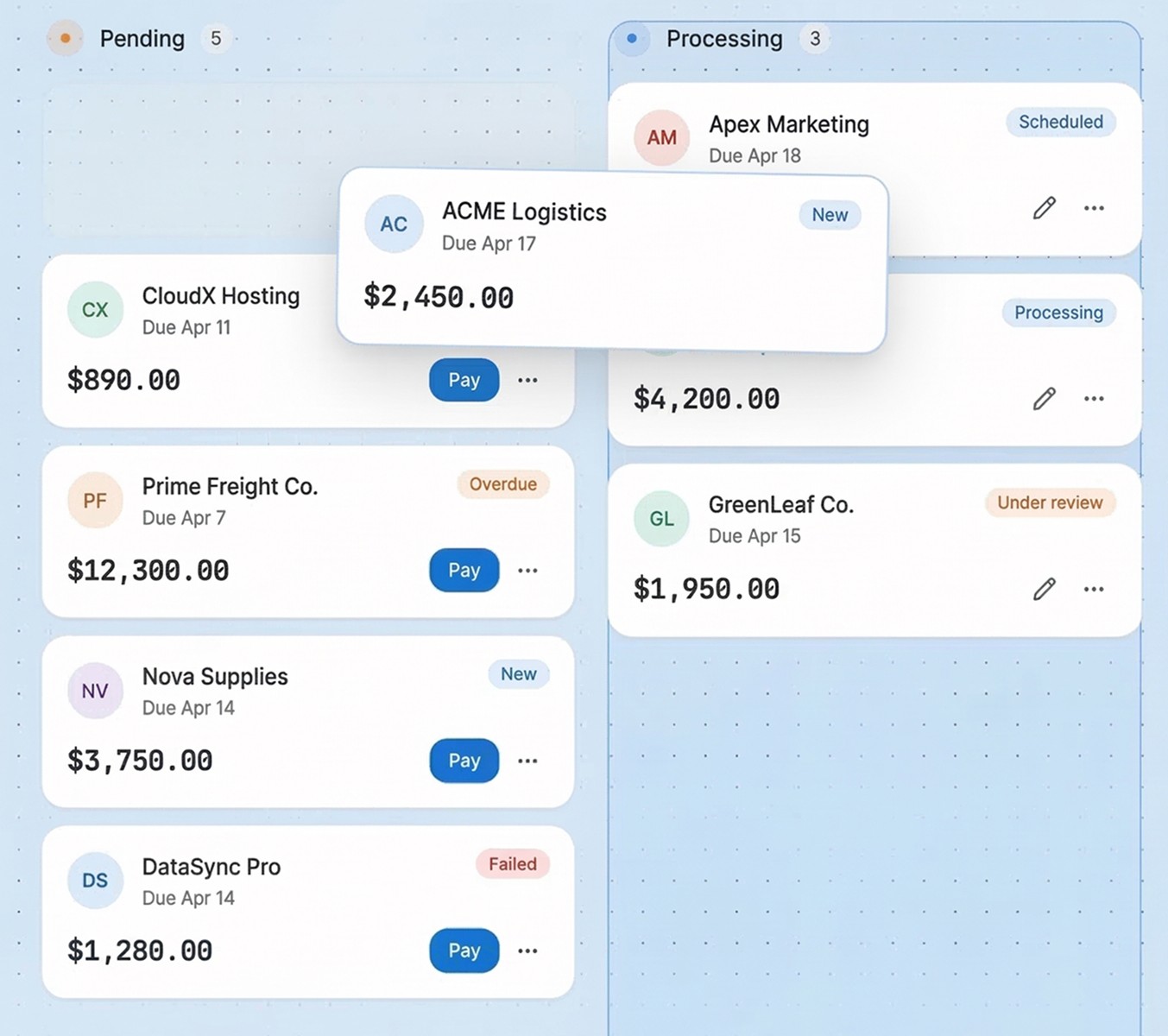
The concept was to represent bills as movable cards in a kanban-style board:
→ Pending (To Do): bills that require action, such as new invoices or failed payment attempts
→ Processing (Doing): payments currently in progress, scheduled transactions, validations, or bank processing
→ Completed (Done): bills already paid, cancelled, or expired
Interaction
Instead of navigating multiple forms, users interact with payments directly on the board.
Dragging a bill to Processing can trigger a modal to schedule or confirm the payment.
Moving a card to Completed prompts actions such as marking the bill as paid, ignoring it, or cancelling the transaction.
As the concept evolved, the board also explored batch interactions, allowing users to select multiple bills and move them together for bulk scheduling and payment operations.
The concept was to represent bills as movable cards in a kanban-style board:
→ Pending (To Do): bills that require action, such as new invoices or failed payment attempts
→ Processing (Doing): payments currently in progress, scheduled transactions, validations, or bank processing
→ Completed (Done): bills already paid, cancelled, or expired
Interaction
Instead of navigating multiple forms, users interact with payments directly on the board.
Dragging a bill to Processing can trigger a modal to schedule or confirm the payment.
Moving a card to Completed prompts actions such as marking the bill as paid, ignoring it, or cancelling the transaction.
As the concept evolved, the board also explored batch interactions, allowing users to select multiple bills and move them together for bulk scheduling and payment operations.
Montly insights
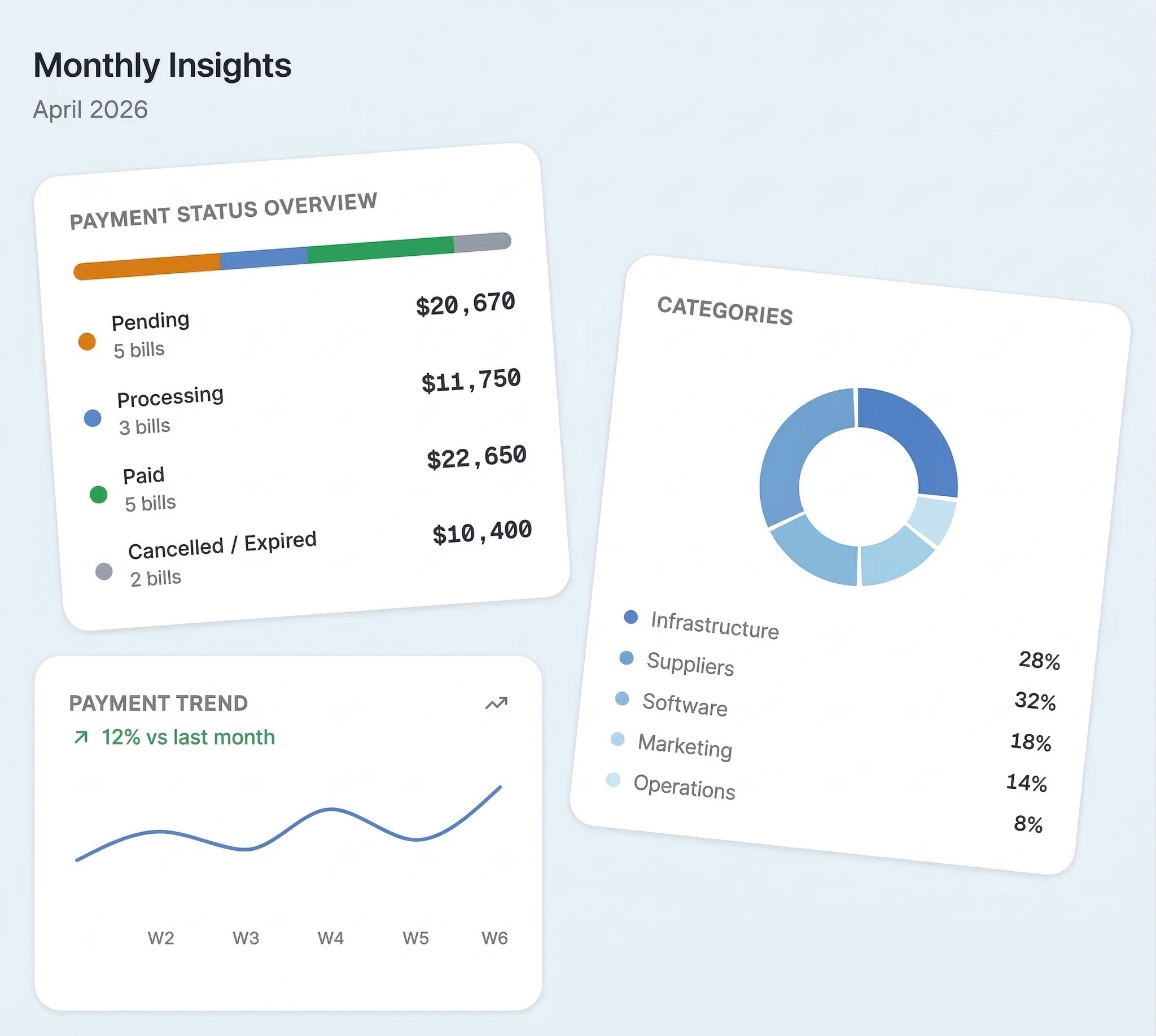
To complement the kanban workflow, I also explored a monthly insights area designed to give entrepreneurs a quick and actionable overview of their outgoing payments.
Instead of focusing only on individual bills, this section helps users step back and understand the bigger picture: payment status distribution, monthly trends, and category-level spending. For business owners, this kind of summary can make the experience more strategic, turning bill management into a clearer view of cash flow, priorities, and potential risks.
Tools
This experiment was prototyped using AI-assisted tools such as v0 and Lovable, using prompt engineering to quickly explore interface structures and interaction patterns.
The goal was not production feasibility, but rapid interaction exploration.
Montly insights
To complement the kanban workflow, I also explored a monthly insights area designed to give entrepreneurs a quick and actionable overview of their outgoing payments.
Instead of focusing only on individual bills, this section helps users step back and understand the bigger picture: payment status distribution, monthly trends, and category-level spending. For business owners, this kind of summary can make the experience more strategic, turning bill management into a clearer view of cash flow, priorities, and potential risks.
Tools
This experiment was prototyped using AI-assisted tools such as v0 and Lovable, using prompt engineering to quickly explore interface structures and interaction patterns.
The goal was not production feasibility, but rapid interaction exploration.
This initial exploration was designed for desktop screens. I recommend opening it on a computer for the best viewing experience.
Open Interactive Prototype
Let's work together
Open to the right remote opportunities. If you're building something complex and need a designer who can hold the full picture, let's talk.

Let's work together
I'm currently open to remote design opportunities, whether freelance, contract, or full-time. I help teams build high-impact digital products through a mix of strategy, design, and user research, with a strong focus on usability, clarity, and business alignment.
Ready to explore a project together?